
Lower-Carbon Cement Has Reached Commercial Scale. The 30% Claim Is Only the Starting Point.

Holcim has opened a calcined-clay production line at its Čížkovice plant in the Czech Republic. The company says the line can produce more than 115,000 tonnes of calcined clay each year and support up to 580,000 tonnes of ECOPlanet cement annually.
Commercial-scale capacity is good news for construction. It moves lower-carbon cement beyond the category of a limited demonstration.
But the headline figure is not the project decision. Holcim says its approach can reduce the cement carbon footprint by around 30 percent without compromising performance. A contractor, designer, or owner still needs to verify the actual product and approved mix that will be supplied to the job.
Carbon claims must stay attached to the product
A general percentage can describe a product line or manufacturing approach. It should not be copied into a project report without checking the environmental product declaration, declared unit, plant, mix, comparison basis, and applicable life-cycle stages.
For project use, the team should review:
the current product-specific or applicable EPD;
structural design and specification requirements;
proposed concrete mix and replacement level;
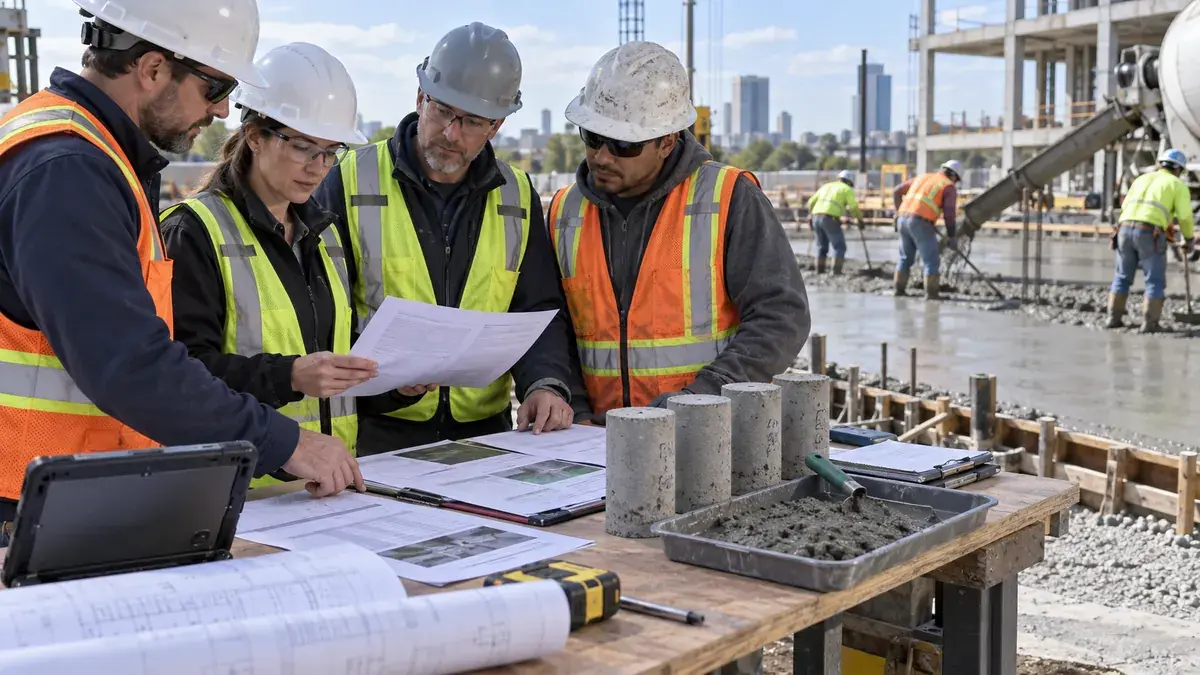
required early and final strength;
curing procedure and expected site conditions;
approved standards and testing requirements;
local production and delivery capacity;
cost and schedule implications; and
consistency between the submitted and delivered material.
The carbon benefit matters only if the product performs for the intended application and the claimed material is actually procured.
Familiar alternatives already teach this lesson
Pozzolanic and other blended cement products have shown that a lower-clinker approach can perform well, but the behavior may not be identical to a traditional mix. Depending on the cementitious materials, proportions, temperature, and curing, early strength development or curing needs can differ.
That does not make the product unsuitable. It means the project team must understand the actual mix rather than rely on a category name.
The same discipline should apply to calcined-clay cement. Trial mixes, submittal review, test results, curing planning, and field quality control should establish whether it meets the project's requirements.
Cost and supply decide whether adoption scales
Environmental benefit is one part of adoption. Contractors also need dependable supply and a commercially workable price.
If a lower-carbon product meets the technical requirements, is available when the project needs it, and competes well on cost, that is the cherry on top. It becomes easier to specify without asking the project to absorb avoidable risk or premium.
Large production lines can improve that equation by making the material less dependent on small pilot quantities. Actual regional availability still needs to be confirmed for each project.
Specify the outcome and verify the delivery
Lower-carbon materials should be encouraged, but credibility comes from traceable project data. The specification, submittal, EPD, mix design, testing, delivery records, and installed work should tell one consistent story.
The 30 percent figure gets attention. The project-specific evidence determines whether the improvement is real.

Comments